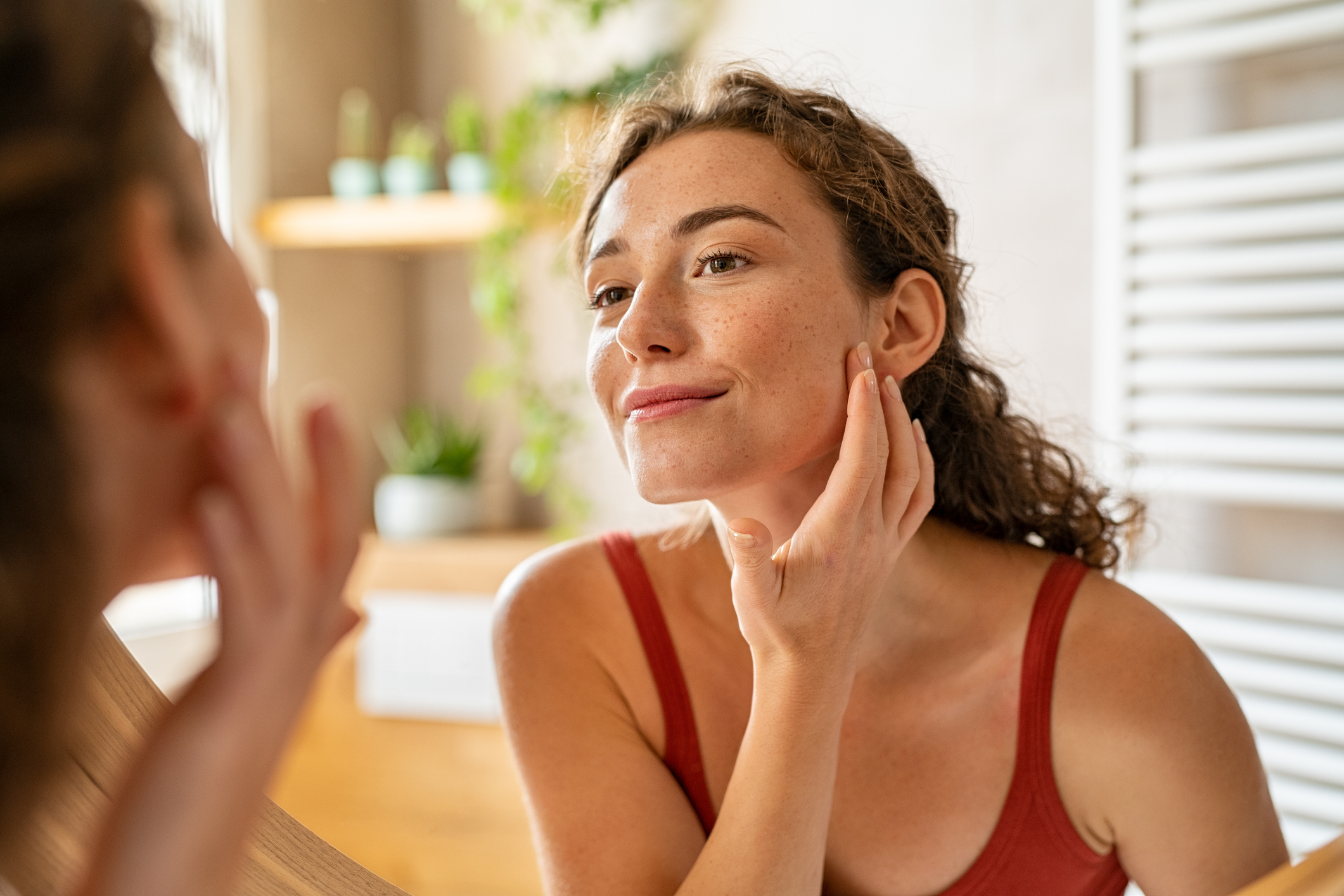
If you’ve noticed changes in your skin while taking semaglutide — dryness, sagging, more visible lines, or what people are calling “Ozempic face” — you’re not imagining things.
Searches for semaglutide side effects on skin have increased as more people begin GLP-1 therapy. The important distinction is this: most visible skin changes are related to weight loss itself, not direct damage from the medication.
Semaglutide does not thin the skin, break down collagen, or “age” the face. What it does is help reduce body fat. When fat volume decreases, especially quickly, the skin must adjust.
Understanding the difference between true skin side effects and weight-loss–related changes makes the process far less alarming — and far more manageable.
Understanding the Common Semaglutide Side Effects on Skin
True dermatologic side effects from semaglutide are uncommon.
In clinical trials, the most frequently reported skin-related reactions were mild injection site issues, including redness, itching, or slight swelling. These reactions were generally self-limited and resolved without intervention.
Common concerns include:
- Skin laxity
- Fine lines becoming more visible
- Facial volume loss
- Mild dryness
- Temporary injection site irritation
When subcutaneous fat decreases, the skin has less structural support beneath it. This makes natural age-related collagen decline more noticeable.
If you want a deeper explanation of facial volume changes, our article on Ozempic face explains why it happens and how to approach it.
5 Ways to Manage Semaglutide Side Effects on Skin and Maintain Your Glow
Skin reflects internal changes. Supporting it during weight loss requires structure.
1. Combat Skin Laxity with Targeted Nutrition
Collagen is built from amino acids. During calorie reduction, protein intake often falls unintentionally.
Research shows adults lose approximately 1% of collagen per year after their mid-20s, with accelerated decline after 40. When weight loss occurs, supporting collagen production becomes more important.
Prioritizing the importance of protein intake helps preserve lean tissue and provides the raw materials needed for skin structure.
Adequate protein supports more than muscle — it supports tissue integrity.
2. Address Dehydration-Induced Dryness
Semaglutide may reduce appetite, and some individuals also drink less fluid as eating patterns change.
Mild dehydration exaggerates fine lines and dullness. Even a small drop in total body water can visibly affect skin texture.
Increasing water intake and supporting electrolyte balance helps maintain skin turgor and glow.
3. Prevent Thinning Skin and Texture Changes
Rapid weight loss is associated with greater skin laxity compared to gradual fat reduction. Studies examining post–bariatric surgery patients show that the rate and magnitude of weight loss influence how much skin redundancy occurs.
While GLP-1 therapy is not surgery, the principle holds: pacing matters.
Gradual, sustainable fat loss allows collagen remodeling to better keep pace with volume changes.
If you’re exploring strategies to maintain structural integrity, reviewing how to maximize semaglutide results can help you approach weight loss more intentionally.
4. Managing Sensitivity at the Injection Site
Injection site reactions are the most common true semaglutide skin side effect.
To reduce irritation:
- Rotate injection sites
- Avoid injecting into bruised or scarred areas
- Allow alcohol swabs to fully dry
- Use proper injection technique
Severe allergic reactions are rare. In large clinical trials, hypersensitivity reactions occurred in a very small percentage of participants.
Persistent hives, spreading rash, facial swelling, or difficulty breathing require immediate medical evaluation.
5. The Role of Electrolytes in Skin Health
Electrolytes regulate cellular hydration and fluid balance. Sodium, potassium, and magnesium influence how well cells retain water.
During calorie reduction, lower food intake may unintentionally reduce electrolyte intake.
Supporting electrolyte balance may reduce dryness, fatigue-related dullness, and fluctuations in skin appearance.
Small foundational adjustments often produce noticeable improvements.
Why Does Weight Loss Cause Skin Sagging and “Ozempic Face”?
“Ozempic face” describes facial volume loss that becomes visible after fat reduction.
The face contains multiple fat pads that support youthful contour. When fat decreases, those pads shrink. The overlying skin must adapt.
Skin elasticity depends on collagen, elastin, genetics, sun exposure history, and age. When weight loss happens quickly, the skin may not contract fully right away.
This phenomenon is not specific to semaglutide. It occurs with:
- Bariatric surgery
- Very-low-calorie diets
- Rapid lifestyle-driven weight loss
Semaglutide does not damage skin fibers. It accelerates fat loss in individuals who respond well.
If pacing concerns you, exploring microdosing semaglutide may provide insight into slower titration strategies.
Can GLP-1 Medications Cause Skin Rashes or Itching?
Rashes and itching are possible but uncommon.
Injection site reactions are the most frequent dermatologic event reported in trials. These are typically localized and mild.
Systemic allergic reactions are rare. Symptoms that require immediate evaluation include:
- Widespread hives
- Facial swelling
- Throat tightness
- Persistent rash beyond injection area
For most individuals, semaglutide side effects on skin are mild and manageable.
Prioritizing Your Skin Health on the Journey to Wellness
Skin changes during weight loss are understandable. They reflect shifts in fat distribution, hydration, and collagen remodeling.
Semaglutide does not directly thin the skin or accelerate aging. Most visible differences stem from the natural process of fat reduction.
Supporting your skin includes:
- Adequate protein intake
- Strength training
- Hydration and electrolytes
- Gradual pacing
- Consistent skincare
Weight loss brings meaningful metabolic benefits. Supporting both internal health and external appearance creates a more confident experience.
If you’re unsure what to expect early in treatment, reviewing what to expect after your first injection can help you prepare holistically.
At Enhance.MD, care plans focus on body composition, metabolic health, and sustainable results — not just the number on the scale.
Schedule a consultation to build a strategy that supports both your skin and your overall wellness journey.
References
1) Varani J, et al. Decreased collagen production in chronologically aged skin. American Journal of Pathology (2006). https://pmc.ncbi.nlm.nih.gov/articles/PMC1606623/
(Collagen decline with age)
2) Shuster S, et al. A study of the decrease of skin collagen content, skin thickness, and bone mass in the postmenopausal woman. British Journal of Dermatology (1987).
https://pubmed.ncbi.nlm.nih.gov/3120067/
(Original source for the 1–2% per year figure)